
SmartRDI served as the IoT and mobile computing competence centre for FIE 27, designing the architecture and firmware for the Transient Information Tag (TIT), a reusable BLE device that digitises livestock traceability end-to-end, from farm to slaughterhouse.
The Challenge
Romanian farms relied on printed passports and manual processes to track animal movements from farm to slaughterhouse. Every animal movement involved physical paperwork, slow verification, and proximity constraints on identification.
FIE 27 set out to eliminate printed documents entirely, replacing paper with a coin-sized BLE device that clips into existing ear tags and communicates wirelessly with mobile phones and gateway infrastructure.
SmartRDI's Role
SmartRDI designed the mobile application architecture for the Android SNIIA Farm Access app, wrote the microcode for the Tag device, and integrated the system with IQ Management's national animal identification database (140M+ animals tracked since 2004).
The platform is modular by design, built on open SDKs so that the concepts can be replicated across EU livestock systems with minimal adaptation.
0
Printed documents required, full paperless traceability
<1m
Animal identification range using embedded BLE short-range mode
<1 min
Per animal processing time in slaughterhouses (down from >1 min)
<20 m
Medium-range bulk identification of animals over BLE
The Device
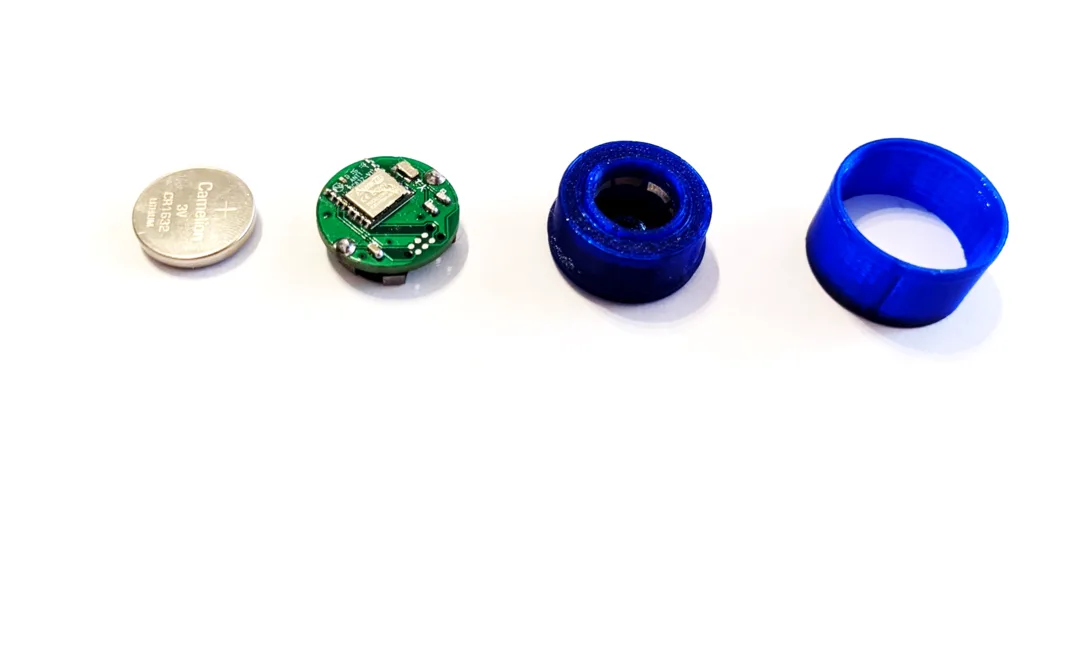
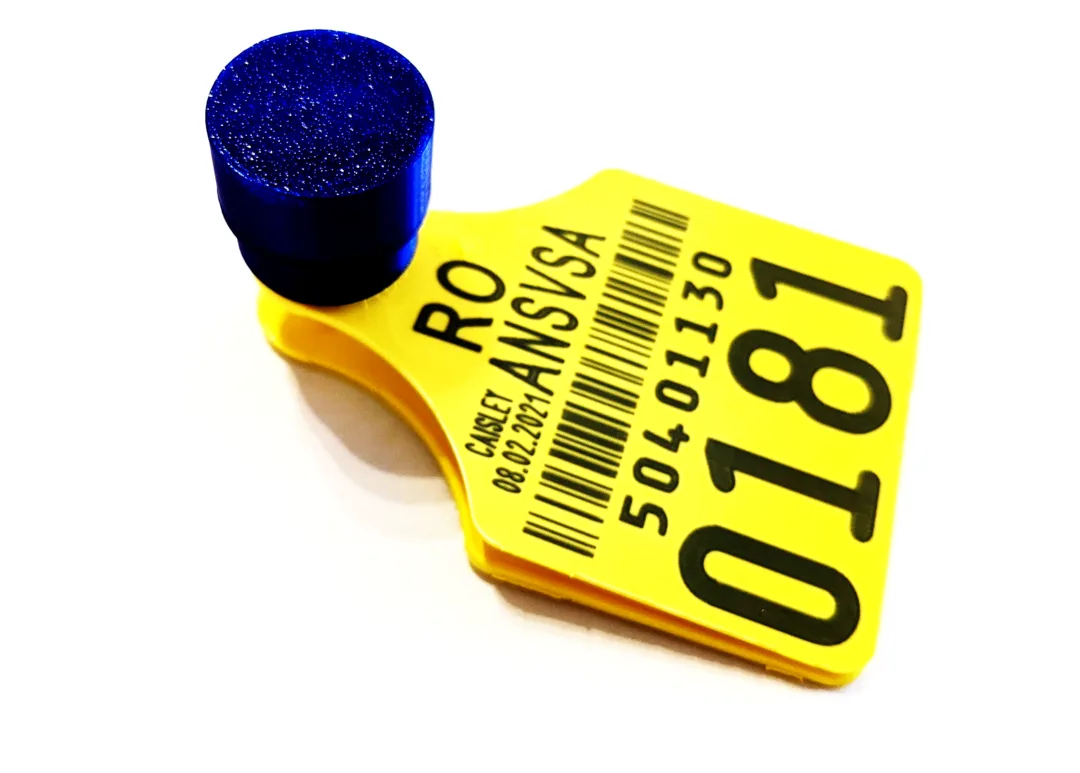
A coin-sized BLE device designed to clip into any existing cattle ear tag. Reusable, rewritable, and compatible with standard EU livestock traceability infrastructure.
ARM® Cortex™ M4F CPU with embedded 2.4 GHz transceiver and Bluetooth Low Energy stack. The brains of the Tag.
Custom PCB designed and printed by the SmartRDI hardware team. Compact circular form factor to fit ear tag housing.
Long-life coin-cell battery holder. Assembly requires three steps: insert battery, place in 3D-printed casing, close casing.
End-to-end process
Step 01
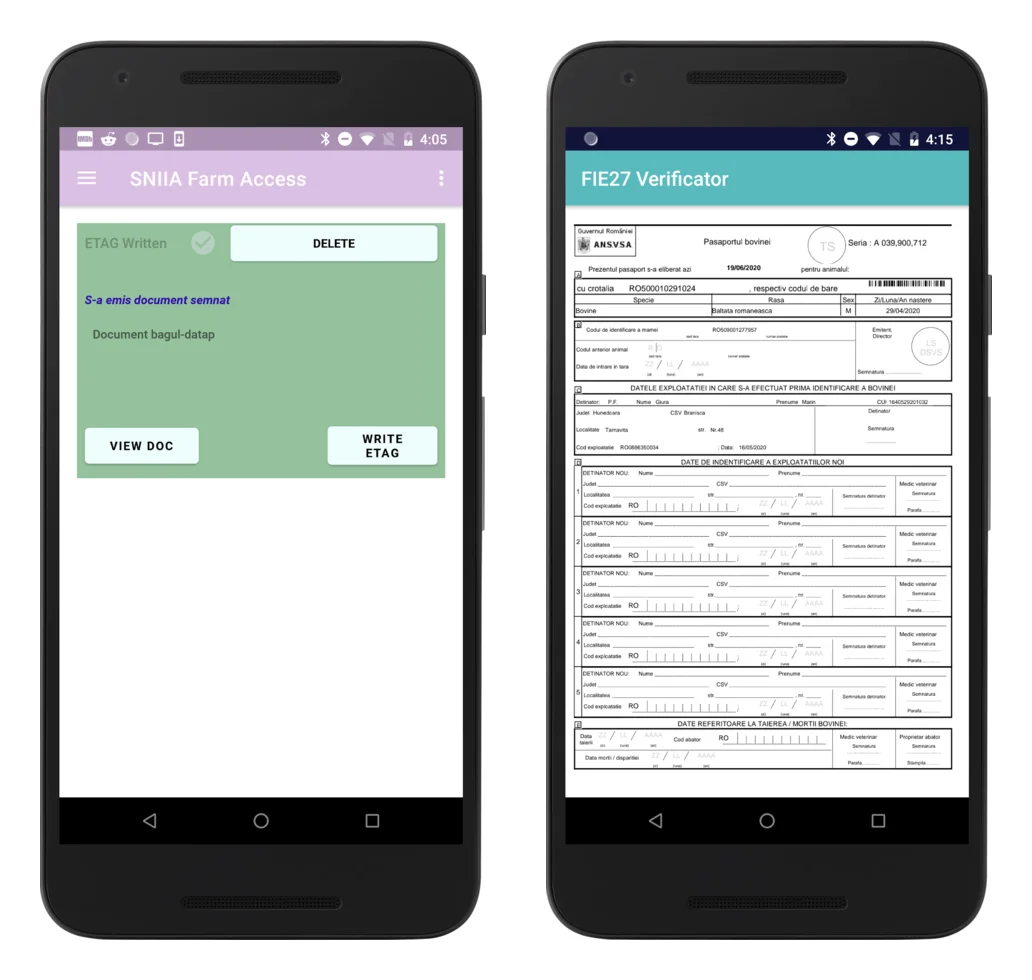
The farmer uses the SNIIA Farm Access Android app to write animal identity data wirelessly to the Tag via NFC/BLE. The app confirms a signed digital document has been generated.
Step 02
The configured Tag snaps into the animal's existing EU-standard ear tag. No new ear tag required, full backward compatibility with existing tagging systems.
Step 03
During transport, the Tag passively broadcasts animal identity over BLE. Gateway devices in transport vehicles can log movements without manual scanning.
Step 04
At the slaughterhouse or checkpoint, the FIE27 Verificator app reads all Tags in range simultaneously. Animal passports are retrieved and displayed in seconds.
Step 05
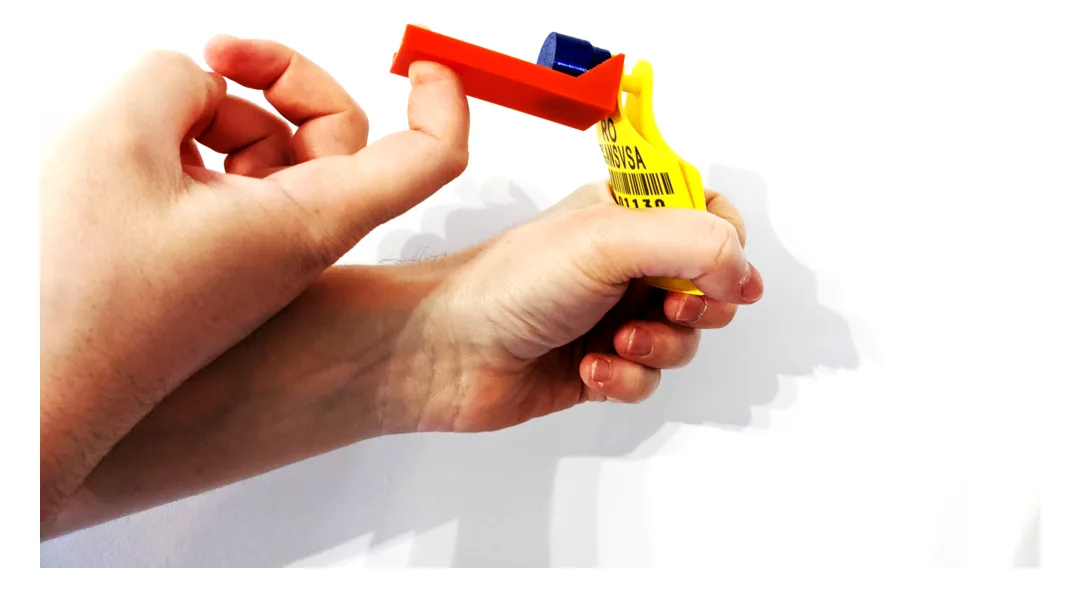
An extraction tool (3D-printed) removes the Tag from the ear tag cleanly. The device is erased and reconfigured for the next animal, zero waste, full reusability.
Impact
Multiple animals can be identified simultaneously within range, enabling mass processing at fairs, transport hubs, and slaughterhouses without individual scanning queues.
Key Performance Indicators
Replicability
The application and database were designed to be compatible with other existing EU animal identification systems, so the approach can be reused across Europe. The demonstration ran in an operational cattle-transport environment with the mAgro Cluster, and delivered a reliable, reusable, rewritable BLE device for exchanging information during animal movements.
Natural beneficiaries are breeding farms, sanitary veterinary authorities and customs, local and national authorities, animal transporters, distributors and traders. A potential collaboration was identified with FIE 28 on blockchain for the food industry.
Technology
Designed from the ground up for the constraints of agricultural environments: dusty, wet, subject to rough handling, and operating far from reliable internet connectivity.
Partners
IQ Management: National Operator for Animal Identification in Romania (140M+ animals since 2004). Concept design, database integration.
mAgro Cluster: Digital Innovation Hub providing logistic infrastructure, farmer training, and community dissemination.
Caisley Eartag Limited: Ear tag hardware compatibility and field testing expertise.
Megabyte: Total computer solutions and IT infrastructure support.
EU Funding
FIE 27 was funded under SmartAgriHubs (Horizon 2020, Grant Agreement No. 818182), an initiative connecting Digital Innovation Hubs with agri-food technology providers across Europe. SmartRDI took part in the South-East Europe cluster, demonstrated at the mAgro Cluster, Romania.